
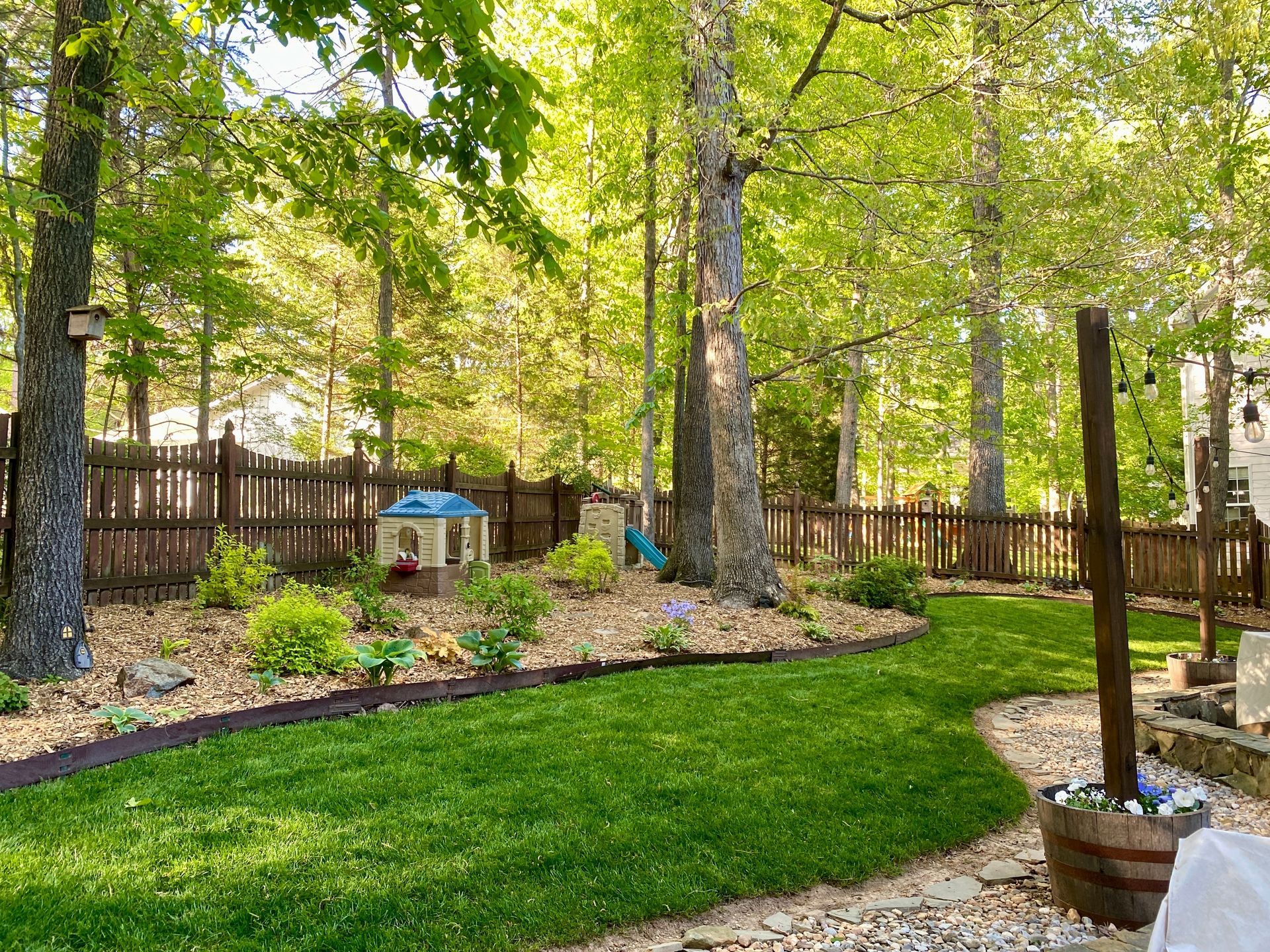
Overgrown Landscapes Rebuilt With Purpose
Landscape renovation in Charlotte for properties where existing plantings have outgrown their original design or deteriorated past routine maintenance
Overgrown shrubs crowding a foundation, garden beds filled with competing weeds and depleted mulch, and landscape materials that have shifted or crumbled—these are the visible signs that an existing landscape has passed the point where routine maintenance can restore its original appearance. Lund Landscape Services, Inc performs landscape renovation for residential properties in Charlotte, removing what no longer works, redesigning the bed structure, and installing updated plantings and materials that align with how the property looks and how you want to maintain it going forward.
Renovation work begins with removal of overgrown vegetation, deteriorating edging, and depleted ground cover before any new design elements are introduced. What gets removed and what stays is a deliberate decision: established trees and healthy structural shrubs that still fit the scale of the space are often worth retaining, while overgrown or misplaced plants that have compromised the bed layout are cleared entirely. The redesign is planned around what remains, incorporating new shrubs, flowers, mulch, and decorative stone to produce a coherent finished result.
Arrange a property assessment with Lund Landscape Services, Inc to identify which existing landscape elements are worth retaining and what the renovation scope would involve.
Why Overgrown Landscapes Need Full Renovation, Not Just Pruning
Heavy pruning on a plant that has significantly exceeded its intended space produces regrowth quickly and rarely restores the original appearance for long. When shrubs have grown into each other, overtaken bed edges, or begun pressing against the home's siding or windows, the underlying problem is a design that no longer fits the space—and pruning addresses the symptom rather than the cause. Renovation replaces the design itself, which is the only approach that produces a lasting correction.
After renovation is complete, the property looks deliberately maintained rather than recently cut back. Bed edges are clean and intentionally shaped, new plantings are scaled correctly for their locations, and the surface materials—mulch, stone, edging—are fresh and consistent. The difference between a renovated landscape and a pruned-back one is visible immediately and holds its appearance for far longer without repeated intervention.
Plant selection during renovation accounts for long-term scale in a way that the original installation may not have. Choosing species whose mature dimensions fit the intended bed space and won't crowd adjacent plants or structures is one of the primary ways renovation work prevents the same problems from recurring over the next decade.
Landscape renovation involves several decisions about what to remove, what to keep, and how to redesign the space. The questions below address how those choices are made and what the process looks like from start to finish.
Questions Before Starting Your Project
How is it determined which existing plants are removed versus retained during a renovation?
The decision is based on the plant's current size relative to its space, its structural health, and whether it fits the redesigned layout—plants that are healthy and correctly scaled are candidates for retention while those that have outgrown their position are removed.
What preparation is required after overgrown vegetation is cleared before new plantings go in?
Cleared bed areas are graded if needed, existing root debris is removed where it would interfere with new plant establishment, and the soil is evaluated to determine whether amendment is warranted before installation begins.
How does redesigning bed structure differ from simply replanting the same layout?
Redesigning the bed structure means reconsidering where bed edges are located, how beds relate to pathways and the home's foundation, and whether the shape and size of each planting zone supports the plants selected for it—a different evaluation than just replacing what was there before.
Why does mulch depth matter in a renovated landscape bed?
Mulch installed at the correct depth suppresses weed establishment in newly cleared beds and retains the moisture that new plantings need to establish root systems, while mulch that is too shallow or too deep creates conditions that work against both goals.
How do landscape renovation projects on Charlotte properties with established trees need to account for root zones?
Existing tree root systems extend well beyond the visible canopy and affect where new plantings can establish and how deep edging or ground preparation can go without damaging roots that contribute to the tree's stability and health.
Lund Landscape Services, Inc completes landscape renovation projects for residential properties in Charlotte, working through removal, redesign, and installation as a single coordinated scope. To begin evaluating your property's current landscape and what a renovation would involve, request an on-site assessment to walk through the existing conditions together.