
Common Areas Residents Notice Every Day
Apartment Complex Landscaping in Charlotte for multi-family properties where shared green spaces and outdoor common areas require consistent, ongoing maintenance
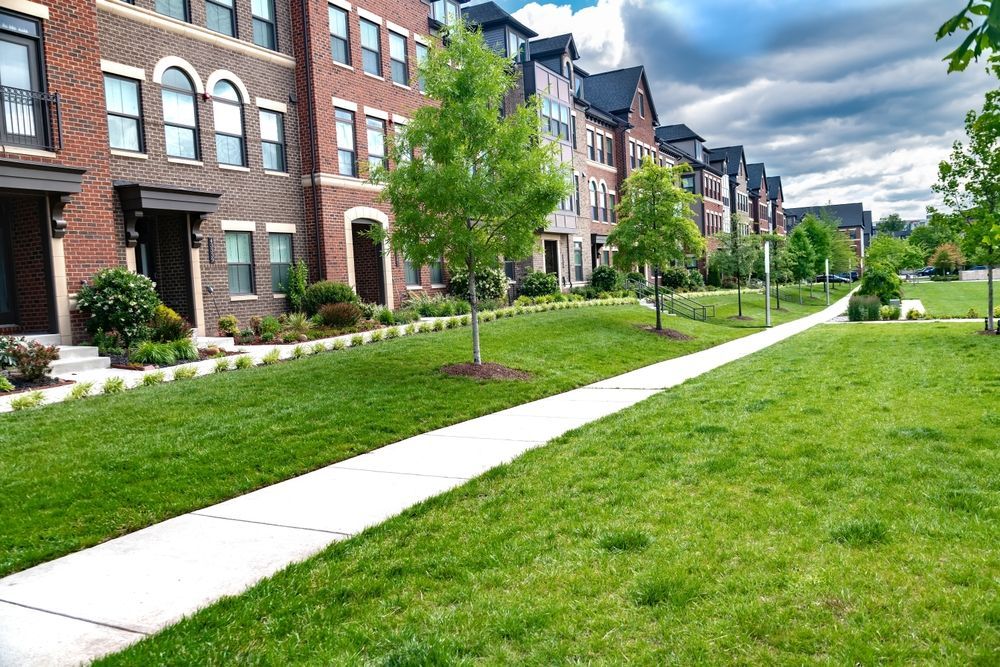
Overgrown courtyards, patchy lawn edges along building entries, and flower beds buried under leaf litter are among the first conditions prospective tenants notice—and current residents notice every time they walk to their car. Lund Landscape Services, Inc handles landscaping for apartment complexes and multi-family properties in Charlotte, maintaining the lawns, shared green spaces, and outdoor common areas that define how a property reads to everyone who lives there or visits. The work is structured around what multi-family properties actually require: reliable, repeatable maintenance that keeps shared spaces in consistent condition across every visit.
Routine service includes mowing, edging, hedge trimming, and weed control across all maintained areas—courtyards, lawn strips along buildings, parking area perimeters, and any landscaped common areas the property includes. Flower beds are refreshed with mulch, seasonal plants, and decorative elements on a schedule that keeps them looking maintained rather than abandoned between attention cycles. Hedge trimming on multi-family properties requires particular care at pedestrian thresholds and entry corridors, where overgrowth affects both sight lines and the overall impression the complex makes.
Arrange a property walkthrough with Lund Landscape Services, Inc to review current maintenance conditions and identify what a consistent grounds program would address across your complex.
Why Multi-Family Grounds Maintenance Requires a Different Approach
Apartment complex landscaping differs from single-property maintenance in one practical way: there are more people interacting with the grounds, at more times of day, across a wider range of areas. Paths between buildings, courtyard seating areas, entry planting beds, and lawn panels between parking rows all see daily foot traffic. A maintenance program that services only the most visible areas while deferring the secondary ones produces uneven results that residents recognize quickly.
Once a full-service visit is completed, residents see specific differences: edged turf along building foundations, trimmed hedges that do not encroach on entry paths, mulched beds with visible soil coverage, and cleared debris from walkways and courtyard surfaces. Property managers working with Lund Landscape Services, Inc receive grounds in a condition they can document and show prospective tenants without preparing for the visit separately.
Bed refresh work—replacing mulch, adding seasonal plantings, or resetting decorative elements—is separate from standard maintenance visits and is planned based on what the beds actually contain and how they have held up since the previous refresh. This distinction matters because lumping bed refresh into a standard maintenance contract often means it either gets skipped or applied too uniformly to address beds that have genuinely different needs.
Multi-family property managers in Charlotte frequently ask how grounds maintenance programs are structured, what specific areas fall within scope, and how the work is sequenced across a visit. The following questions address those points directly.
What Residents and Managers Ask About the Work
What areas of an apartment complex are typically included in a grounds maintenance program?
Maintained areas generally cover building perimeter lawns, courtyard turf, landscaped bed borders, hedge lines along entries and walkways, parking lot perimeter planting areas, and debris clearance from paved surfaces.
How is hedge trimming sequenced during a maintenance visit?
Hedges are trimmed before final mowing passes so that clippings from the hedge work are collected along with grass clippings rather than left on freshly cut turf surfaces.
When should mulch in apartment complex beds be refreshed rather than just maintained?
Beds that have compacted down to less than two inches of coverage or show significant weed penetration through the existing layer are ready for a full refresh rather than spot treatment.
How does the property layout of a multi-family complex affect how maintenance visits are organized?
Larger complexes with multiple buildings and courtyard areas are serviced in a defined sequence so that no section is skipped and the time between visits is consistent across all areas of the property.
What indicates that an edging job on a multi-family property was done correctly?
Clean separation between turf and pavement at every transition—including parking lot curbs, sidewalk edges, and building foundation lines—with no tufted overhang remaining after the visit.
Lund Landscape Services, Inc works with apartment complex owners and property managers in Charlotte who need dependable grounds care without managing the details themselves. Contact the office to request an on-site review of your property and discuss what a structured maintenance program would include.